Our first days in Cairo became a lesson in contrasts. We stayed at Bayt Yakan, a beautifully restored historic house in Old Cairo that has become a center for culture, education, traditional crafts, and neighborhood renewal. We learned to work with brass, explored Egyptian artistic traditions, and met people committed not simply to preserving old buildings, but to keeping an entire cultural inheritance alive. Outside its doors was another education entirely.
The streets were impossibly narrow—cars, scooters, three-wheeled vehicles, horses, donkey carts, and seemingly constant honking. On our first arrival, some of us stepped out of the car with our hearts pounding. It took several days to understand that the horns did not necessarily signal anger. They were part of the language of movement: I’m here. I’m beside you. I’m coming through. What first felt like chaos slowly became a lesson in making room for ways of living completely different from our own.
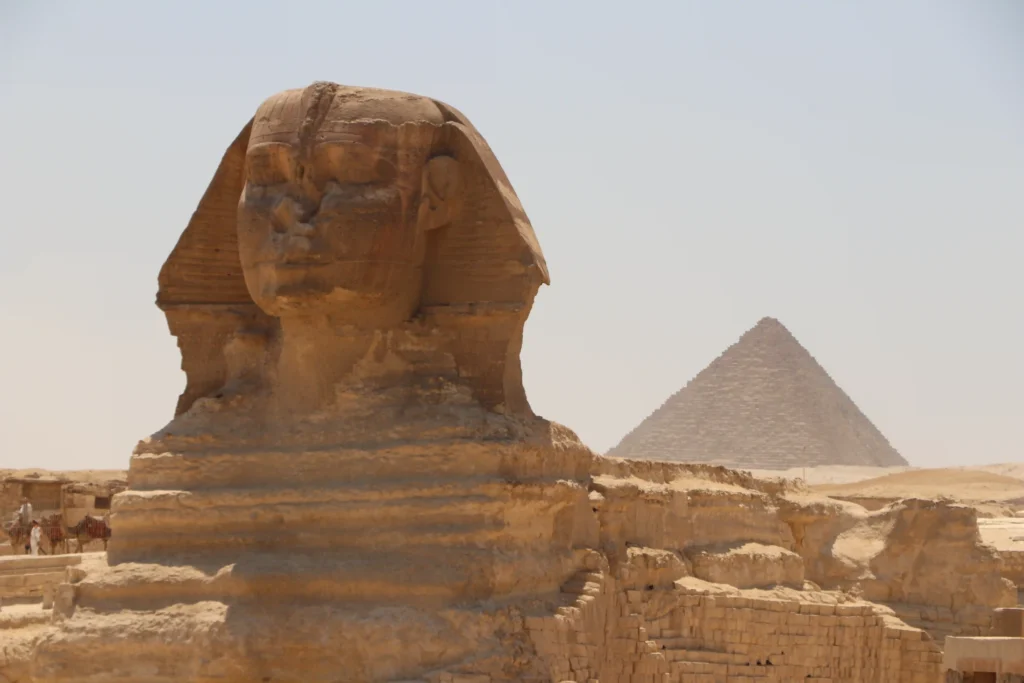
Then came Giza. We stood before the Great Sphinx and the pyramids, wrapped our heads against the desert sun, rode camels, and tried to comprehend something human beings built roughly 4,500 years ago. The pyramids were constructed largely from limestone and once covered in brilliant white casing stone that reflected the Egyptian sun. Modern archaeology has also overturned the familiar story that they were simply built by enslaved people. Skilled craftsmen and organized laborers lived and worked near Giza, receiving food and provisions for their labor.
That changed the way we looked at them. At the museum, surrounded by sarcophagi, chariots, beds, chairs, jewelry, and burial objects created thousands of years ago, the craftsmanship was almost impossible to comprehend. Tutankhamun lived more than 3,300 years ago, yet the delicacy and imagination of these objects felt astonishingly alive. Our greatest realization was not about ancient Egypt at all. It was about humanity. Thousands of years ago, people possessed the same capacity for imagination, devotion, beauty, sacrifice, and creativity that we possess today. When human beings connect themselves to something larger than themselves—God, community, meaning, or a vision of eternity—they can accomplish what seems impossible. The buildings of Cairo may weather and crumble. Empires disappear. But the human spirit keeps creating. And in Egypt, we felt it everywhere.