Ignite the Fire of Wisdom Within

AYA MISSION

The mission of the Arete Youth Academy is to ignite within 1,000 young people the passion to pursue their highest potential—arete—by introducing them to the wisdom of history’s most influential thinkers and leaders. Through meaningful dialogue with humanistic mentors and advisors, a rigorous interdisciplinary curriculum, and immersive global travel experiences, participants deepen their understanding of themselves and the world while cultivating the wisdom, compassion, and courage essential to becoming global citizens.

GLOBAL CITIZENSHIP

At the Arete Youth Academy, we view global citizenship as a journey of inner and outer engagement—cultivating character, critical thought, and compassionate action in an interconnected world. 

Lou Marinoff, a philosopher and advisor to AYA, has emphasized that global citizens are those who develop the philosophical courage to question assumptions, bridge cultural divides, and act from a place of shared humanity. Drawing from her scholarship and dialogues with peacebuilders, Ralph Waldo Emerson scholar Sarah Wider, also an advisor for AYA, suggests that global citizenship begins with a commitment to listen deeply and act justly. Tu Weiming, a leading Confucian thinker, teaches that global citizens must nurture a sense of spiritual community that transcends national and cultural boundaries, embracing the whole of humanity as kin.

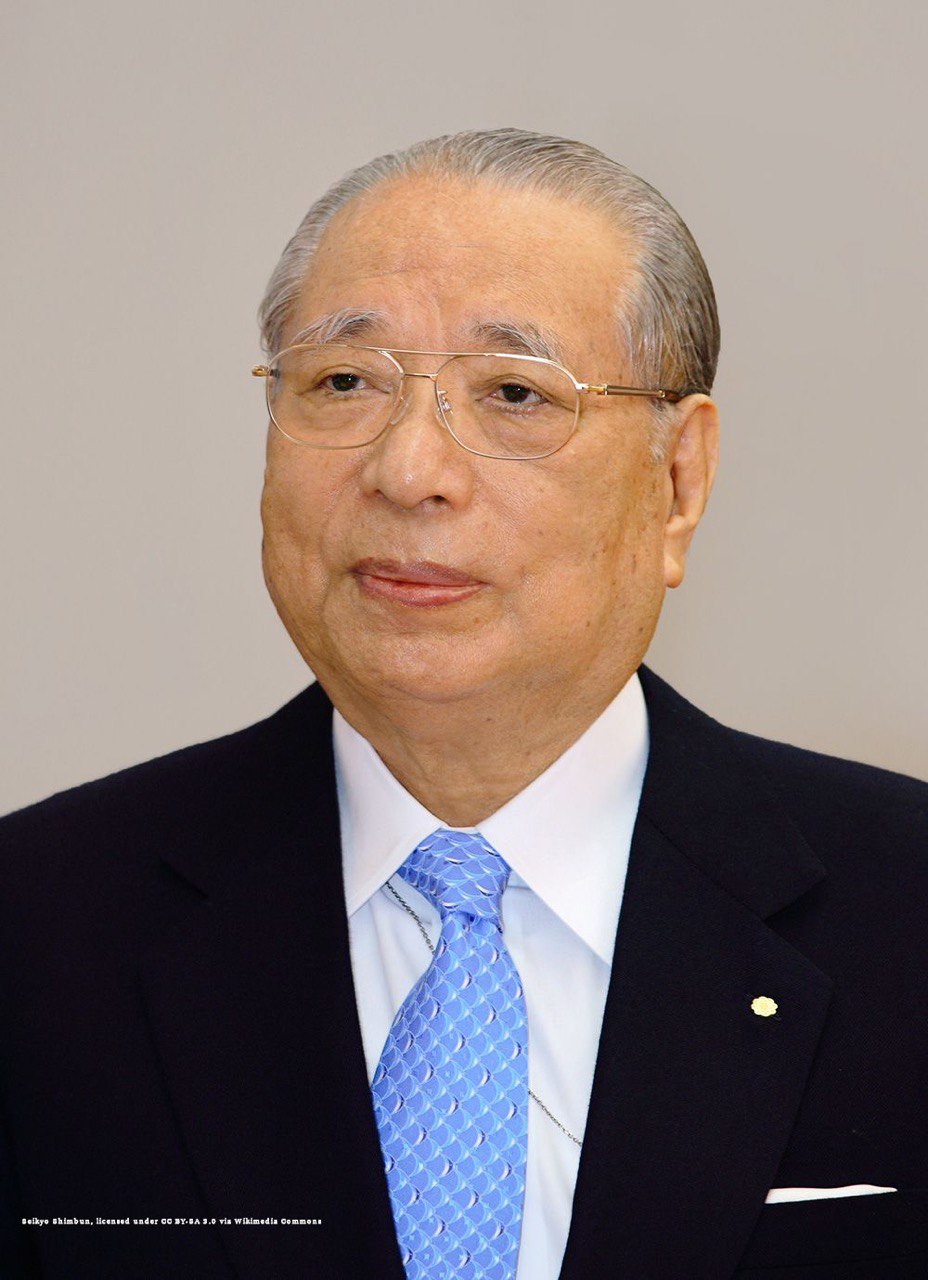
These diverse but harmonious perspectives converge in the vision of Japanese Buddhist philosopher and peacebuilder Daisaku Ikeda, who articulated three essential and widely embraced qualities of a global citizen—attributes we uphold as AYA’s three foundational pillars for global citizenship.

AYA 3 Pillars of Global Citizenship

The wisdom to perceive the interconnectedness of all life.

This involves understanding that all people and all life are interrelated, and that our actions have personal, local, and global consequences. It is a call to develop a broader, more inclusive perspective of our shared humanity and our collective responsibility toward each other and the environment.

The courage not to fear or deny difference, but to respect and strive to understand people of different cultures and to grow from encounters with them.

This emphasizes the importance of empathy and openness, particularly toward those who seem different or distant from us. It is about valuing diversity and allowing it to expand our own sense of identity and connection.

The compassion to maintain an imaginative empathy that reaches beyond one’s immediate surroundings and extends to those suffering in distant places.

This speaks to the capacity to care about—and act on behalf of—people one may never meet. It is a deep sense of solidarity and responsibility that transcends borders and national identities.

ARETE WEST

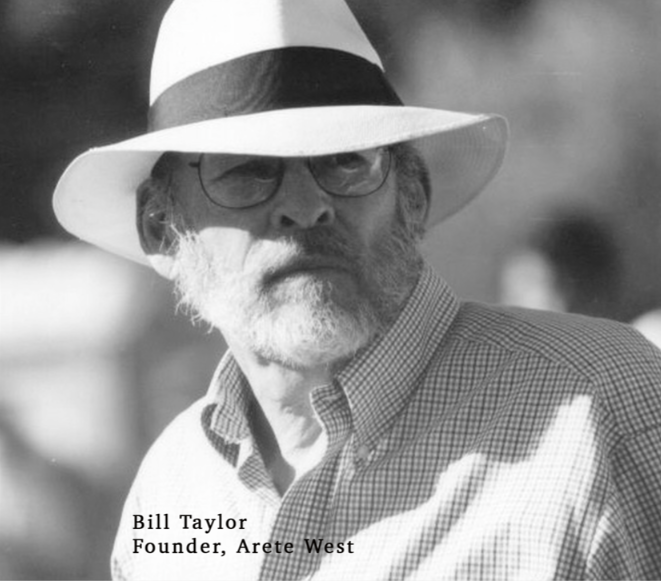
https://areteyouthacademy.org/wp-content/uploads/2025/07/about.pngOur modern model is also shaped by the late Bill Taylor’s Arete West program, which since 1978 has combined physical exploration with philosophical inquiry. Through travel, study, and dialogue, Arete West participants connected theory to lived experience—and many credit it with altering the course of their lives. From walking ancient paths to engaging with new cultures, students discovered that courage, empathy, and excellence are not abstract ideals, but qualities developed through deep engagement with the world. Their stories continue to remind us that true education lives not only in the mind, but in the heart and in action. Since its founding in 1978, the Arete West program has given rise to hundreds of

powerful stories of personal growth and transformation:
From the Olympic festivities in Olympia, to the streets of Istanbul and the Hagia Sophia, to the early morning Parthenon readings and wandering the streets of Rome, to the “Madinas” and rough roads of Tunisia, to the silence of the Sahara and the screams at a street soccer game in Tunis…, to the infamous birthday dance, together we have experienced the greatest classrooms in the world. 

Callie Anderson

But it wasn’t just the settings that emboldened my reflective nature; it was also my association with a new group and a new culture. For 24 hours a day, I was surrounded by an amazing group of people. The nine of us all shared a common disposition: we would embrace everything that came at us. We would discuss it, try to digest it, and even if a topic didn’t quite sit right. Read More..

Tim Adams

It was with awkward footing, then, that I came to my first Arete meeting. Rather than training my thought on the natural world–on the immutable physical laws of the universe, the transmutation of compound A to compound B or the staggering lives of a cell–Arete turned the proverbial microscope around and asked me to examine the human condition. What is the nature of being? Read More..

Andrew Hagan

You can learn more about Arete West and its entire history by clicking here.

DAISAKU IKEDA

The Arete Youth Academy (AYA) is a nonsectarian program founded by Agora Productions, a 501(c)(3)nonprofit dedicated to fostering critical thinking, dialogue, and global citizenship through film and education.

AYA LEADERSHIP & MENTORS

Those of us who participated in Arete were particularly fortunate in having our horizons expanded and our perceptions challenged at an early age.” – Jason Kintzel, Arete West Participant

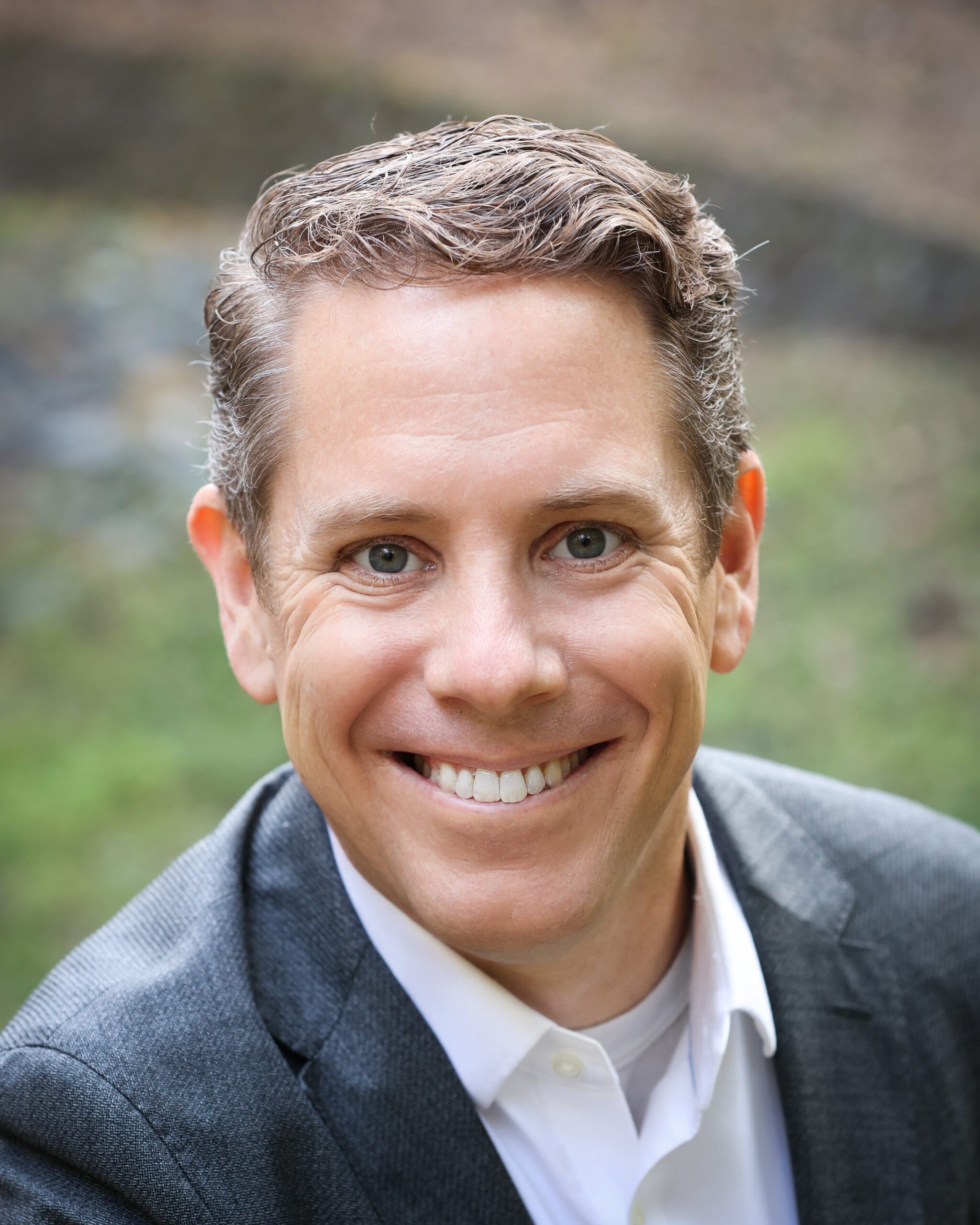
The Arete Youth Academy is the vision of co-founders Darin Nellis and Andrew Henderson, who bring together a dynamic and highly experienced team united by a shared commitment to youth empowerment, global citizenship, and humanistic education. They are joined by three exceptional collaborators—Shelley Fine, Robin Pendoley and Marné Jones-Boulware—each of whom brings a distinct set of strengths that together form the foundation of AYA’s leadership.


Their combined backgrounds in education, healthcare, mental health, international affairs, storytelling, and youth leadership ensure a holistic and strategic approach to development, grounded in both practical experience and a deep belief in the potential of young people. With experience designing and leading global travel programs, as well as ties to the original Arete West legacy, the team brings both continuity and fresh vision to inspire and equip the next generation of global citizens.

Darin Nellis

https://areteyouthacademy.org/wp-content/uploads/2025/06/m1.jpg Immediately after college, I served as a Peace Corps Volunteer in Mauritania, West Africa—an experience that profoundly transformed my perspective and sparked a lifelong pursuit of learning, as well as a deep desire to live as a global citizen. Before that, I graduated from the University of California, Los Angeles (UCLA) with a degree in Political Science, focusing on International Relations, and later earned an MBA from Marymount University, where I was awarded a fellowship to work in inner-city housing projects while completing my studies. I then served as Director of the “Success By 6” early childhood development initiative at the United Way of Greater Los Angeles. These, among many other professional experiences, have profoundly shaped my worldview and deepened my commitment to supporting the growth and development of young people.  
Andrew Henderson

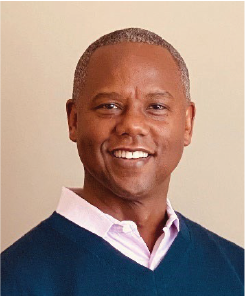
https://areteyouthacademy.org/wp-content/uploads/2025/06/Asset-2-e1748275099444.pngIn addition to my role as the co-founder of the Arete Youth Academy, I am the CEO of GrayHawk Health, a home and virtual-care organization focused on serving older, disabled, and under-resourced communities. For the past decade, I’ve worked to make healthcare more humane and accessible, particularly for those often overlooked by the system. But my path here was far from linear.

I began my career as an Executive Director at JP Morgan, later leading eCommerce initiatives at The Walt Disney Company. In 2014, I purchased a small home care agency and transformed it into GrayHawk Home Care, shifting its focus to Medicaid Waiver services to ensure broader access to quality care. In 2022, I launched GrayHawk Health to address deeper systemic gaps by integrating medical, social, and case management services for patients with complex needs.
Shelley Fine

https://areteyouthacademy.org/wp-content/uploads/2025/06/women2.jpg

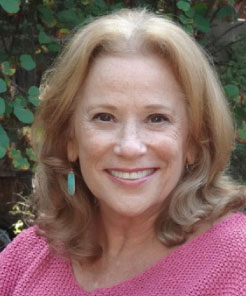
In my work as a licensed clinical social worker (LCSW), I have experienced a meaningful career working with adolescents, adults, and couples in both community mental health settings and in private practice.  As a supervisor, creating an atmosphere of trust and safety where interns can speak openly about their clients, their own process, and support each other through vicarious learning has been exciting to witness.  Exploring resilience, humor, and the potential of transforming suffering into purpose and creativity deepens my work and informs my writing. I’m looking forward to supporting Arete’s profound mission of developing compassionate, insightful world citizens.  And, I’m sure that I’ll learn from them as well.  I received my MSW from USC.
Robin Pendoley

Robin Pendoley

After founding Thinking Beyond Borders, a nonprofit dedicated to international education, I had the privilege of developing programs that immersed young people in real-world global issues like public health, education, and environmental sustainability. As both a teacher and a curriculum designer, I’ve always sought to blend rigorous critical thinking with hands-on experience, because I believe that real learning happens when ideas meet lived reality.

My own journey with transformative education began as a participant in the Arete West program in the summer of 1995. That experience opened my eyes to the power of dialogue, travel, and philosophy to shape not just what we know, but who we become. It’s a foundation that has guided me ever since, fueling my commitment to helping students discover their capacity to lead with both wisdom and compassion.
Marné Jones-Boulware

https://areteyouthacademy.org/wp-content/uploads/2025/06/women1.jpg My professional path has taken me through many corners of the media world. I’ve served as a Development Executive at CBS and later as a Senior Standards Editor at ABC/Disney, where I worked to ensure the ethical and creative integrity of major productions like American Ninja Warrior and Ultimate Beastmaster. I now run Power Pals Productions, a consulting firm dedicated to navigating the complex world of Standards and Practices in television and streaming. As a Producer at Agora Productions, I’ve had the opportunity to help bring to life projects that reflect values I care about deeply, including the films Gandhi, King, Ikeda, and Evac Protocol. I hold a BA in Psychology from Hampshire College and an MBA in International Business from National University—but more than any credential, it’s been the chance to connect with passionate, thoughtful people that has kept me inspired. 

Jed Nykolle Harme

Jed Nykolle Harme, Arete Creative Scholar Coordinator (24, Philippines),

is an award-winning journalist and editor whose work spans investigative reporting, community journalism, global technology, and finance. A licensed agriculturist, journalism fellow of Rappler’s Aries Rufo Journalism Workshop, and cum laude graduate of Aklan State University, she uses storytelling to strengthen democratic culture. She aspires to become an educator advancing agricultural education and press freedom across her generation.

ARETE ADVISORS

By three methods we may learn wisdom: First, by reflection, which is noblest; Second, by imitation, which is easiest; and third by experience, which is the bitterest. – Confucius

Bi-monthly virtual meetings include interactive presentations, exercises, and discussions led by distinguished advisors. We are currently assembling a diverse network of advisors from around the world—many of whom have engaged in dialogues with Daisaku Ikeda—who will participate in these virtual sessions throughout the nine-month curriculum. Our first three confirmed collaborators include:

CHANDRA WICKRAMASINGHE

“The universe doesn’t respect the boundaries between different disciplines. The differences between biology and astronomy and chemistry and so on, these are man-made artifacts of thinking.”

SARAH WIDER

“Mechanical noises surround us. It is difficult to find places of true quiet. Difficult, but necessary. This quiet is always within us in the pulse of our heartbeat, and the space of our breath, and when we ourselves begin to listen to our inner stillness, we can begin to listen, truly listen, to others.”

NEELAKANTA RADAKRISHMAN

“Nonviolence is not just the absence of violence, but the presence of love, understanding, and a deep respect for all life.”

AXINIA DZUROVA

“...one can never catch up with the development of technologies. You just can’t, you get tired. There’s a magnificent Eastern saying – “Stop and let your soul catch up with you”

MAYA SOETORO-Ng

“For me, peace is about activating each individual’s potential for bringing about collective good—and, in doing so, enlivening that community energy.”

JAN OBERG

“The better future will, by necessity, have to be about humility, unity in diversity, conflict-resolution instead of violence, and about creating win-win solutions for the common global good.”

See if your employer will match your donation!

All information provided by
Double the Donation
Painted by Renaissance master Raphael, “The School of Athens” brings together history’s greatest thinkers—Plato, Aristotle, Socrates, Pythagoras, Ptolemy, and others—in a grand hall of learning. Each figure represents a unique pursuit: ethics, reason, mathematics, metaphysics, and the search for truth. Raphael didn’t just paint a scene—he captured the human aspiration to grow, question, and collaborate across all fields of life: philosophy, science, art, and civic society. These diverse minds are united not by power or conformity, but by a shared purpose: to elevate humanity, to cultivate virtue, and to help each person achieve their arete.

Support the Arete Youth Academy through your donor-advised fund or by including us in your will or estate plan.

To recommend a grant through your DAF (e.g., Fidelity, Schwab, Vanguard), direct it to:
Agora Productions, Inc.
EIN: 20-8516833
Please note “Arete Youth Academy” in the designation.

To make a planned gift, you can help ensure that future generations benefit from an education grounded in peace, dialogue, and global citizenship.

We’re happy to work with you and your advisor to make the process simple and meaningful.
Contact: AreteGiving@AgoraProductions.org

Many employers match donations made to Agora Productions, Inc.—the nonprofit home of Arete Youth Academy. It’s a simple way to amplify your impact and support transformative education for emerging global leaders. Just enter your company name in the popup window to the right and follow the steps to submit your match request.

If your company or institution is interested in supporting AYA in other ways, such as partnerships, grants, visibility opportunities, co-branded materials, or speaking engagements with our founders or advisors, we’d love to hear from you. Please contact us at AreteGiving@AgoraProductions.org to explore meaningful collaboration.

We welcome donations by check, bank transfer (ACH), wire, or appreciated securities.

To donate by check:
Please make checks payable to:
Agora Productions, Inc.
Memo: Arete Youth Academy (or “Bill Taylor Scholarship Fund” if applicable)

Mail to:
Arete Youth Academy
c/o Agora Productions, Inc.
P.O. Box 452688
Los Angeles, CA 90045

To donate by bank transfer (ACH):
For larger or recurring donations, ACH is a secure and cost-effective option.
Simply select “Bank” as your payment method on our donation page and follow the step-by-step process.

To donate by stock, wire, or securities transfer:
We gladly accept gifts of appreciated assets.
Please contact us directly for transfer instructions:
AreteGiving@AgoraProductions.org

Click here to visit our Arete Youth Academy Fundraising Page on Facebook.

Hit “Share” to share it with your friends on Facebook to multiply your donation and help us reach more supporters.

Bill Taylor was the visionary founder of the original Arete West program, which ran from 1979 to 2017. Over the course of 40 years, he personally led students on 20 transformative journeys across the globe, inspiring hundreds of young people to pursue wisdom, leadership, and compassionate service. His encouragement helped spark the creation of the Arete Youth Academy, which carries forward his mission to empower youth through education. This scholarship fund ensures his legacy continues to shape future generations.

To designate your gift:

1. Visit our donation page.

2. Enter your donation amount and choose the “Give in honor or in memory of someone” option.

3. In the “Honoree’s Name” field, type “Bill Taylor Scholarship Fund”

Gifts to the Bill Taylor Scholarship Fund will be used to provide tuition support for one or more participants in each cohort—extending Bill’s spirit of mentorship and service to future generations.

We’ll send a personalized message to your honoree or their family, letting them know how their influence continues to empower youth through Arete.

Contribute in Bitcoin, Ethereum, and other major cryptocurrencies. All crypto gifts are tax-deductible in the U.S. To initiate a crypto donation, please contact us at AreteGiving@AgoraProductions.org for secure instructions and wallet address details. Our team will guide you through the process and provide a tax acknowledgment letter upon receipt.

Paris and Lyon, France

France will provide a stage for critical inquiry into colonial legacies, secularism, and artistic revolution. In Paris and Lyon, students will engage with Orientalism by Edward Said and Europe and Islam by Hichem Djait, uncovering how power and perception shape global narratives. Sites may include the Panthéon, the Institut du Monde Arabe, and local cultural institutions. Dialogue will be framed through Ikeda’s Before It Is Too Late and exchanges with French scholars and artists. The animated film Persepolis—a Franco-Iranian narrative of identity and dissent—will enrich reflections on postcolonial voice and visual storytelling.

Berlin and Weimar, Germany

Germany offers a profound space to examine 20th-century ethical crisis and cultural resilience. In Berlin, sites like the Topography of Terror and the Berlin Wall Memorial will serve as touchstones for exploring themes in Bonhoeffer’s The Cost of Discipleship and the film The Lives of Others. In Weimar, participants will investigate the Enlightenment and cultural innovation through Goethe, Arendt, and the Bauhaus. Edward Said’s Orientalism and Ikeda’s Inner Transformation provide frameworks for addressing memory, otherness, and reconciliation. Ode to Joy and Wings of Desire may offer artistic accompaniment to discussions of post-war European rebirth.

Rome and Florence, Italy

Italy brings Renaissance thought and classical ideals into vibrant focus. In Rome and Florence, students will examine Machiavelli’s The Prince, Plato’s Dialogues, and Raphael’s The School of Athens to explore civic ethics, aesthetics, and philosophical lineage. Museum visits and street-level engagement with artists and students provide tangible links to the humanistic ideals echoed in Daisaku Ikeda’s Art of True Relations. Beethoven’s Ode to Joy, studied as an embodiment of unity, may be juxtaposed with Italian artistic movements that shaped European identity and values.

Athens, Greece

In Greece, students will walk in the footsteps of the world’s first philosophers—tracing the origins of inquiry, democracy, and the examined life. Standing in the Agora, where Socrates engaged young Athenians in fearless dialogue about virtue and truth, participants will reflect on how authentic conversation remains the heartbeat of human progress. Visits to the Parthenon, the Acropolis Museum, and the ruins of Aristotle’s Lyceum will anchor discussions on the birth of reason and the moral responsibilities of free thought. Key readings will include selections from Plato’s Apology and Republic, Pericles’ Funeral Oration, and Constantine Cavafy’s timeless poem Ithaka, urging travelers to cherish the inner journey as much as the destination. Students will also explore Aristotle’s Nicomachean Ethics, reflecting on his vision of “eudaimonia”—a flourishing life achieved through virtue and self-mastery—and its relevance to modern global citizenship.

Sofia & Plovdiv, Bulgaria

In Bulgaria, participants will explore the country’s pivotal role as a cultural bridge between East and West, engaging deeply with its spiritual, philosophical, and historical contributions. A key focus will be the philosophical dialogue “The Lion’s Path” between Daisaku Ikeda and renowned Bulgarian art historian Axinia Djourova, offering insights into the power of cultural memory and humanistic values in post-communist societies. The cohort will meet with Djourova and students at Sofia University, where they will participate in structured cross-cultural exchanges and reflective dialogue on shared ethical concerns. Visits will include the Ivan Duychev Centre for Slavo-Byzantine Studies, which Djourova led for many years, to examine Bulgaria’s enduring role in preserving Byzantine intellectual and artistic traditions. Participants will also explore museums and cultural sites in Sofia and Plovdiv, gaining a comprehensive view of Bulgaria’s influence from ancient Thracian civilizations to its vibrant contemporary arts scene.

Istanbul, Turkey

As a city bridging East and West, Istanbul provides an immersive backdrop to explore The Art of the Byzantine Empire by David Talbot Rice and The Fall of Constantinople 1453 by Steven Runciman. Students will study Byzantine aesthetics and Ottoman legacies through visits to the Hagia Sophia, Blue Mosque, and Topkapi Palace, while also engaging with visual and poetic traditions tied to mysticism and power. Ikeda’s Choose Life dialogue may anchor discussions on civilizational cycles. Turkish cultural expressions—from Sufi poetry to contemporary music—invite reflection on identity, continuity, and transformation.

Jerusalem, Israel

In Jerusalem, participants will investigate interfaith ethics through texts like Scars of War, Wounds of Peace by Shlomo Ben-Ami and My Promised Land by Ari Shavit. Sandy Tolan’s The Lemon Tree will serve as a humanizing lens through which to examine the Israeli-Palestinian conflict. Students may also explore The Heart of Islam by Nasr and Heschel’s The Sabbath, creating a tri-faith ethical conversation. In-person dialogue with Palestinian and Israeli youth, faith leaders, and scholars—potentially including figures like Dr. Mustafa Barghouti—will animate philosophical themes of reconciliation and historical memory. Artistic engagement may include viewing the photographic work Refugee by Khaled Akil.

Amman and Petra, Jordan

In Jordan, students may journey from Amman’s Roman ruins to the carved facades of Petra, guided by themes in Seven Pillars of Wisdom by T.E. Lawrence and Islam and the Arab Awakening by Tariq Ramadan. These texts allow for critical inquiry into colonial entanglements and modern Arab identity. Jordan’s cinematic voice may be represented by Theeb, a film set during WWI that portrays Bedouin culture. The site experience may be deepened by exchanges with youth on contemporary challenges like water justice, alongside reflections inspired by the contemplative poetry of Naomi Shihab Nye.

Medina, Saudi Arabia

In Medina, students will explore the origins of Islam and the inclusive spirit of the Prophet Muhammad’s community. Discussions will center on No God but God by Reza Aslan and The Constitution of Medina, offering a philosophical lens on early Islamic pluralism and gender equity. Dialogues may be enhanced through Daisaku Ikeda’s Global Civilization: A Buddhist-Islamic Dialogue, which emphasizes shared ethical foundations. Students will visit sacred sites, meet local scholars, and engage in cross-cultural dialogue with Saudi students. The spiritual tone of the trip is complemented by visual study of Osman Hamdi Bey’s Whirling Dervishes and music by Umm Kulthum.