At the Arete Youth Academy, we view global citizenship as a journey of inner and outer engagement—cultivating character, critical thought, and compassionate action in an interconnected world.
Lou Marinoff, a philosopher and advisor to AYA, has emphasized that global citizens are those who develop the philosophical courage to question assumptions, bridge cultural divides, and act from a place of shared humanity. Drawing from her scholarship and dialogues with peacebuilders, Ralph Waldo Emerson scholar Sarah Wider, also an advisor for AYA, suggests that global citizenship begins with a commitment to listen deeply and act justly. Tu Weiming, a leading Confucian thinker, teaches that global citizens must nurture a sense of spiritual community that transcends national and cultural boundaries, embracing the whole of humanity as kin.
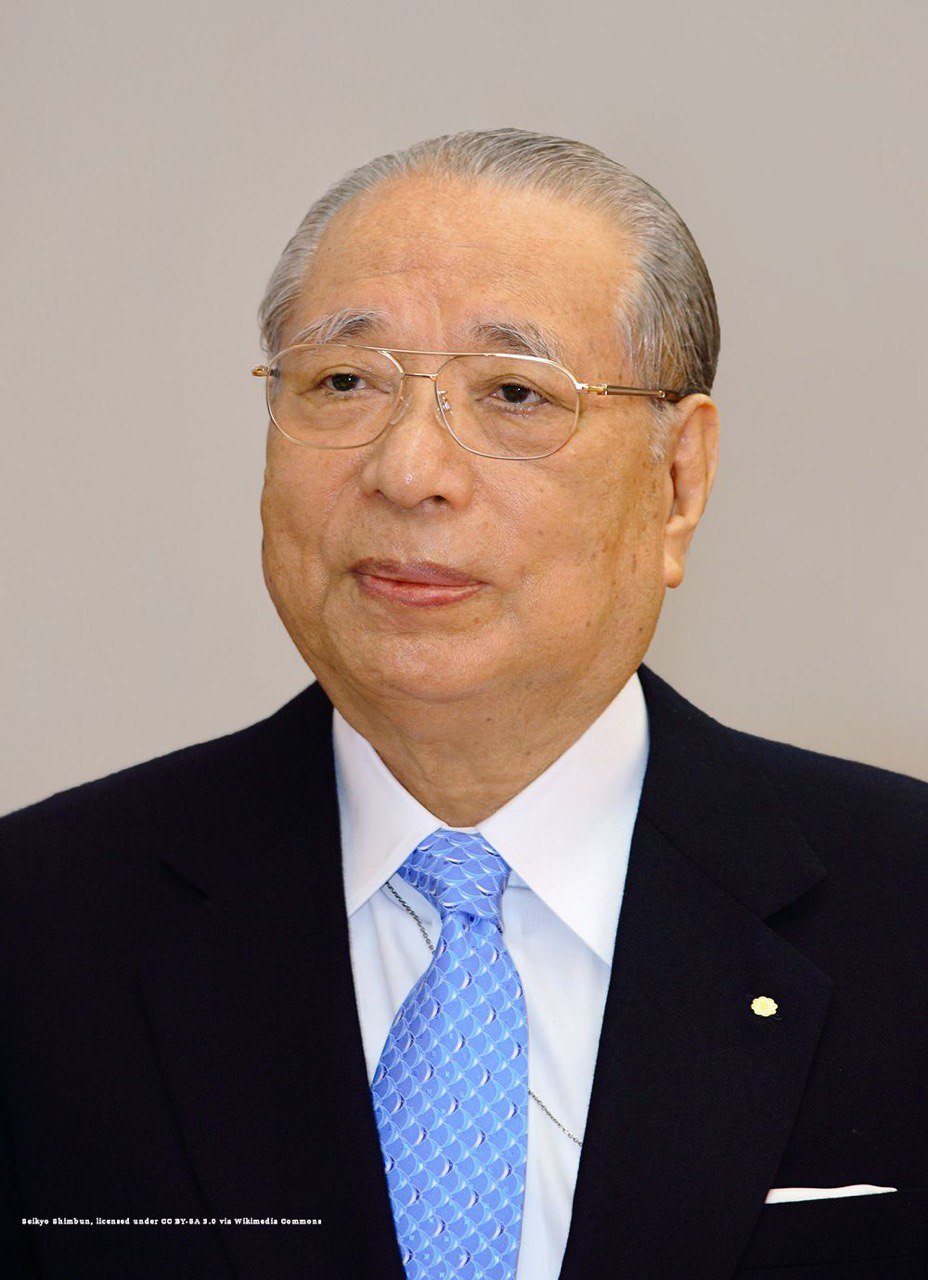
These diverse but harmonious perspectives converge in the vision of Japanese Buddhist philosopher and peacebuilder Daisaku Ikeda, who articulated three essential and widely embraced qualities of a global citizen—attributes we uphold as AYA’s three foundational pillars for global citizenship.
The Arete Youth Academy (AYA) is a nonsectarian program founded by Agora Productions, a 501(c)(3)
nonprofit dedicated to fostering critical thinking, dialogue, and global citizenship through film and education.
The Arete Academy is inspired by the educational paradigms set by Plato’s Academy and Aristotle’s Lyceum, founded during significant societal shifts and intellectual questioning in ancient Greece. Plato established his Academy around 387 BC in response to political fluctuations and ethical dilemmas, highlighted by the execution of his mentor Socrates, which underscored a profound decline in moral values.
Athenian society’s inability to appreciate Socrates’ rigorous ethical standards exemplified the era’s moral crisis, spurring Plato to create an institution that would develop leaders with intellectual acumen and the moral fortitude necessary to uphold democratic principles in challenging times. The Academy was not merely an educational institution but a response to the societal need for a new kind of leadership and moral grounding. It aimed to foster intellectual growth among leaders who could think critically and uphold democratic values amid increasing insecurity and the allure of autocratic rule. Similarly, Aristotle’s Lyceum was built on these foundational ideals, extending the vision to include empirical research and the study of the natural world, which further equipped young leaders with a comprehensive understanding of their world and their role within it.
Arete Youth Academy seeks to embody this same transformative purpose—cultivating a generation of leaders who possess the wisdom, courage, and compassion needed to confront today’s global challenges. Much like the youth of Athens, students today face growing threats to democratic norms and a cultural drift toward materialism and division. By placing virtue at the heart of education, Arete aims to nurture individuals who can lead with integrity, bridge divides, and respond creatively to the moral questions of our time.
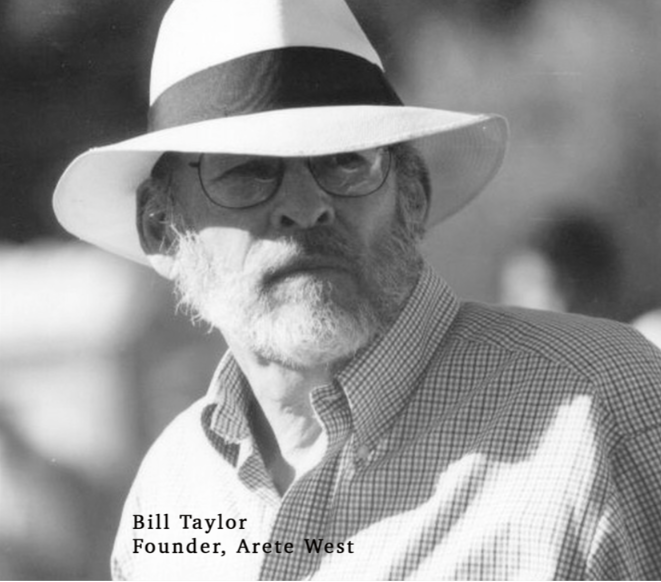
Our modern model is also shaped by the late Bill Taylor’s Arete West program, which since 1978 has combined physical exploration with philosophical inquiry. Through travel, study, and dialogue, Arete West participants connected theory to lived experience—and many credit it with altering the course of their lives. From walking ancient paths to engaging with new cultures, students discovered that courage, empathy, and excellence are not abstract ideals, but qualities developed through deep engagement with the world. Their stories continue to remind us that true education lives not only in the mind, but in the heart and in action. Since its founding in 1978, the Arete West program has given rise to hundreds of
powerful stories of personal growth and transformation:
Life will never be the same after Arete, and I mean that in the most positive way possible. The friendships, lessons, challenges, and experiences have left a lasting impact on me. I return home not only with memories of places visited but with a renewed perspective on humanity and a deeper appreciation for the interconnectedness of our world.
Neha Barua
But it wasn’t just the settings that emboldened my reflective nature; it was also my association with a new group and a new culture. For 24 hours a day, I was surrounded by an amazing group of people. The nine of us all shared a common disposition: we would embrace everything that came at us. We would discuss it, try to digest it, and even if a topic didn’t quite sit right. Read More..
Tim Adams
It was with awkward footing, then, that I came to my first Arete meeting. Rather than training my thought on the natural world–on the immutable physical laws of the universe, the transmutation of compound A to compound B or the staggering lives of a cell–Arete turned the proverbial microscope around and asked me to examine the human condition. What is the nature of being? Read More..
Andrew Hagan
The Arete Youth Academy (AYA) is a nonsectarian program founded by Agora Productions, a 501(c)(3)nonprofit dedicated to fostering critical thinking, dialogue, and global citizenship through film and education.

The Arete Academy is deeply inspired by the life and philosophy of Daisaku Ikeda, a global peacebuilder, poet laureate, and advocate of humanistic education. Central to Ikeda’s teachings is the belief that a profound inner transformation in one individual—what he called human revolution—can become the catalyst for broader societal change.
Ikeda taught that peace, justice, and compassion begin not with systems, but with self-reflection and personal growth. This conviction drove his decades-long effort to inspire ordinary people toward extraordinary acts of courage and care, building a worldwide movement rooted in dialogue, respect for life, and the dignity of all people. He played a pivotal role in establishing Soka Gakkai – a global lay Buddhist network centered on the principle of value creation, which grew from a few thousand members after World War II to over 10 million before his passing in 2023.
Ikeda’s commitment to education as a force for good was realized through founding the global Soka school system and his more than 1,600 dialogues with world leaders, thinkers, and activists—from Arnold Toynbee to Nelson Mandela. Through his writings and peace proposals to the United Nations, he emphasized that true education nurtures wisdom, empathy, and global citizenship. His legacy affirms that real change starts within, and that each young person has the power to shape a more humane world. Ikeda hoped that by sharing these dialogues—stories of individuals who had risked much and overcome great obstacles—he could encourage young people to see their own capacity for courage and contribution. In this way, Arete carries forward his vision: connecting youth with the lives and wisdom of those who have shaped the world through their humanity.
Visit Daisaku Ikeda’s official website for further details on his influential engagements, books, and extensive contributions
to peace and education.
“AYA is a space where curiosity, dialogue, and human connection turn differences into opportunities for growth.” – Shada Shama, AYA 2026 Participant
The Arete Youth Academy is the vision of co-founders Darin Nellis and Andrew Henderson, who bring together a dynamic and highly experienced team united by a shared commitment to youth empowerment, global citizenship, and humanistic education. They are joined by three exceptional collaborators—Shelley Fine, Robin Pendoley and Marné Jones-Boulware—each of whom brings a distinct set of strengths that together form the foundation of AYA’s leadership.
Their combined backgrounds in education, healthcare, mental health, international affairs, storytelling, and youth leadership ensure a holistic and strategic approach to development, grounded in both practical experience and a deep belief in the potential of young people. With experience designing and leading global travel programs, as well as ties to the original Arete West legacy, the team brings both continuity and fresh vision to inspire and equip the next generation of global citizens.
Immediately after college, I served as a Peace Corps Volunteer in Mauritania, West Africa—an experience that profoundly transformed my perspective and sparked a lifelong pursuit of learning, as well as a deep desire to live as a global citizen. Before that, I graduated from the University of California, Los Angeles (UCLA) with a degree in Political Science, focusing on International Relations, and later earned an MBA from Marymount University, where I was awarded a fellowship to work in inner-city housing projects while completing my studies. I then served as Director of the “Success By 6” early childhood development initiative at the United Way of Greater Los Angeles. These, among many other professional experiences, have profoundly shaped my worldview and deepened my commitment to supporting the growth and development of young people.
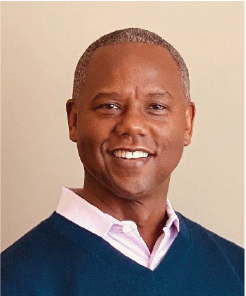
In addition to my role as the co-founder of the Arete Youth Academy, I am the CEO of GrayHawk Health, a home and virtual-care organization focused on serving older, disabled, and under-resourced communities. For the past decade, I’ve worked to make healthcare more humane and accessible, particularly for those often overlooked by the system. But my path here was far from linear.
I began my career as an Executive Director at JP Morgan, later leading eCommerce initiatives at The Walt Disney Company. In 2014, I purchased a small home care agency and transformed it into GrayHawk Home Care, shifting its focus to Medicaid Waiver services to ensure broader access to quality care. In 2022, I launched GrayHawk Health to address deeper systemic gaps by integrating medical, social, and case management services for patients with complex needs.
But perhaps the most personal and profound source of inspiration for me has come through my daughters. I was fortunate enough to see them participate in a cross-cultural program at a young age, where they studied abroad and learned about conflict resolution alongside international peers. Watching them grow more compassionate, curious, and open-minded as a result of those experiences has deepened my own belief in the importance of global education. It’s my hope to continue providing them with opportunities to become true global citizens—and to offer the same kind of transformative learning to Arete Youth Academy participants around the world.

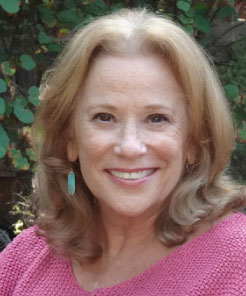
In my work as a licensed clinical social worker (LCSW), I have experienced a meaningful career working with adolescents, adults, and couples in both community mental health settings and in private practice. As a supervisor, creating an atmosphere of trust and safety where interns can speak openly about their clients, their own process, and support each other through vicarious learning has been exciting to witness. Exploring resilience, humor, and the potential of transforming suffering into purpose and creativity deepens my work and informs my writing. I’m looking forward to supporting Arete’s profound mission of developing compassionate, insightful world citizens. And, I’m sure that I’ll learn from them as well. I received my MSW from USC.

My work has been about connecting people to place through environmental education and community conservation. As a Peace Corps volunteer in West Africa, I learned how to listen and learn, and to always challenge my own assumptions. In my work as an environmental educator and college professor on New York’s Hudson River Estuary, I remind students that they are already scientists, even without advanced degrees and labcoats. I love that Arete builds global citizenry across interests, from culture and art to politics and philosophy. I think that environmental justice is another important thread that can unite us, not divide us. We all share needs, wants, and joys that a healthy ecosystem can deliver.
I currently serve as the Hudson River Education Coordinator for the New York State Department of Environmental Conservation, in partnership with the Water Resource Institute at Cornell University. I also teach environmental science at Marist University and actively volunteer as an EMT.
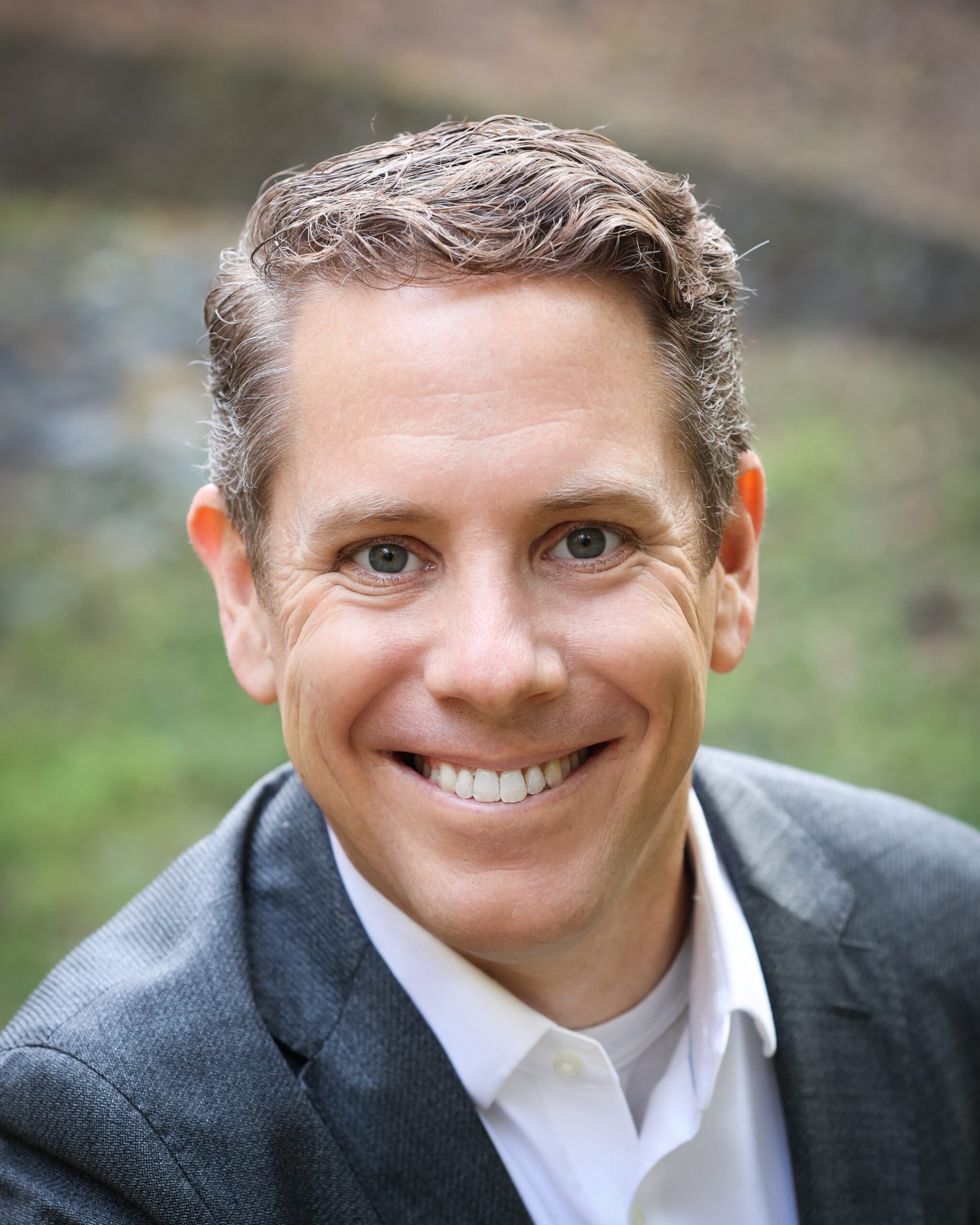
After founding Thinking Beyond Borders, a nonprofit dedicated to international education, I had the privilege of developing programs that immersed young people in real-world global issues like public health, education, and environmental sustainability. As both a teacher and a curriculum designer, I’ve always sought to blend rigorous critical thinking with hands-on experience, because I believe that real learning happens when ideas meet lived reality.
My own journey with transformative education began as a participant in the Arete West program in the summer of 1995. That experience opened my eyes to the power of dialogue, travel, and philosophy to shape not just what we know, but who we become. It’s a foundation that has guided me ever since, fueling my commitment to helping students discover their capacity to lead with both wisdom and compassion. Today, I continue to design, consult, and speak on projects that foster equity, cross-cultural understanding, and youth empowerment. Working with the Arete Youth Academy feels like a return to the roots of my own growth—a chance to help ignite in others the same transformative spark that once shaped me.
My professional path has taken me through many corners of the media world. I’ve served as a Development Executive at CBS and later as a Senior Standards Editor at ABC/Disney, where I worked to ensure the ethical and creative integrity of major productions like American Ninja Warrior and Ultimate Beastmaster. I now run Power Pals Productions, a consulting firm dedicated to navigating the complex world of Standards and Practices in television and streaming.
As a Producer at Agora Productions, I’ve had the opportunity to help bring to life projects that reflect values I care about deeply, including the films Gandhi, King, Ikeda, and Evac Protocol. I hold a BA in Psychology from Hampshire College and an MBA in International Business from National University—but more than any credential, it’s been the chance to connect with passionate, thoughtful people that has kept me inspired. Working with Arete Youth Academy is a continuation of my lifelong passion for supporting young people. I believe every student has a unique voice worth cultivating, and I hope to contribute to an environment where curiosity, integrity, and authenticity are not only valued but expected.
My journey has been shaped by a deep interest in stories within my community. I have served as a volunteer journalist for various grassroots organizations, working across investigative reporting and community journalism, and receiving various awards for my work. Beyond that, I am also a licensed agriculturist in the Philippines.
I always believed that learning should extend beyond classroom. As Program Manager of Arete, I look forward to learning alongside young people with diverse experiences and contributing to a community that values thoughtful dialogue, personal growth, and the development of compassionate and responsible global citizens.
By three methods we may learn wisdom: First, by reflection, which is noblest; Second, by imitation, which is easiest; and third by experience, which is the bitterest. – Confucius
Bi-monthly virtual meetings include interactive presentations, exercises, and discussions led by distinguished advisors. We are currently assembling a diverse network of advisors from around the world—many of whom have engaged in dialogues with Daisaku Ikeda—who will participate in these virtual sessions throughout the nine-month curriculum. Our first three confirmed collaborators include:
Support the Arete Youth Academy through your donor-advised fund or by including us in your will or estate plan.
To recommend a grant through your DAF (e.g., Fidelity, Schwab, Vanguard), direct it to:
Agora Productions, Inc.
EIN: 20-8516833
Please note “Arete Youth Academy” in the designation.
To make a planned gift, you can help ensure that future generations benefit from an education grounded in peace, dialogue, and global citizenship.
We’re happy to work with you and your advisor to make the process simple and meaningful.
Contact: AreteGiving@AgoraProductions.org
Many employers match donations made to Agora Productions, Inc.—the nonprofit home of Arete Youth Academy. It’s a simple way to amplify your impact and support transformative education for emerging global leaders. Just enter your company name in the popup window to the right and follow the steps to submit your match request.
If your company or institution is interested in supporting AYA in other ways, such as partnerships, grants, visibility opportunities, co-branded materials, or speaking engagements with our founders or advisors, we’d love to hear from you. Please contact us at AreteGiving@AgoraProductions.org to explore meaningful collaboration.
Stock Donation Instructions
Thank you for your interest in supporting The Arete Youth Academy (an Agora Productions program) with a stock donation. Below are the instructions your broker will need to initiate a direct transfer of securities to our Charles Schwab brokerage account:
Brokerage Transfer Details (DTC Delivery):
Important Notes:
Contact for Confirmation or Questions:
Darin Nellis
Executive Director, The Arete Youth Academy/Agora Productions
(310) 694-8119
We are deeply grateful for your generous support. Your contribution will help us empower the next generation of global leaders.
Warm regards,
The Arete Youth Academy Team
Click here to visit our Arete Youth Academy Fundraising Page on Facebook.
Hit “Share” to share it with your friends on Facebook to multiply your donation and help us reach more supporters.
Bill Taylor was the visionary founder of the original Arete West program, which ran from 1979 to 2017. Over the course of 40 years, he personally led students on 20 transformative journeys across the globe, inspiring hundreds of young people to pursue wisdom, leadership, and compassionate service. His encouragement helped spark the creation of the Arete Youth Academy, which carries forward his mission to empower youth through education. This scholarship fund ensures his legacy continues to shape future generations.
To designate your gift:
1. Visit our donation page.
2. Enter your donation amount and choose the “Give in honor or in memory of someone” option.
3. In the “Honoree’s Name” field, type “Bill Taylor Scholarship Fund”
Gifts to the Bill Taylor Scholarship Fund will be used to provide tuition support for one or more participants in each cohort—extending Bill’s spirit of mentorship and service to future generations.
We’ll send a personalized message to your honoree or their family, letting them know how their influence continues to empower youth through Arete.
In France, Creative Scholars will explore the humanistic tradition through Victor Hugo’s Les Misérables, examining questions of justice, conscience, inequality, redemption, and the individual’s responsibility to society. Near Paris, students will return to the Literary House of Victor Hugo at the Château des Roches in Bièvres, which Daisaku Ikeda founded as an international center for literature, art, and cultural exchange. Through Hugo’s life and work, participants will consider how literature can challenge injustice and awaken compassion. Visits to Parisian cultural and historical sites, together with dialogue with French scholars and young people, will connect the ideals of nineteenth-century humanism to the challenges facing a new generation of global citizens.
In China, students will explore one of the world’s oldest continuous civilizations while examining the relationship between Confucian humanism, collective responsibility, modernization, and global citizenship. In Beijing, Tu Weiming and Daisaku Ikeda’s New Horizons in Eastern Humanism will frame the dialogue on Chinese philosophy and the encounter between Eastern and Western thought, complemented by films such as Zhang Yimou’s To Live. Participants will engage in dialogue with students and scholars at Peking University and explore Beijing’s historical and contemporary life. A possible journey to Xi’an, the ancient capital and eastern gateway of the Silk Road, will illuminate centuries of exchange among Chinese, Buddhist, Islamic, and Central Asian civilizations.
In Italy, Creative Scholars will explore the evolution of Western humanism from the classical world through the Renaissance. In Florence, Dante’s Divine Comedy will provide a lens for examining moral choice, transformation, and the human journey, while Michelangelo’s David and Renaissance art will illuminate changing ideas of human dignity and potential. Students will also explore the life and legacy of Florence Nightingale, who was born in Florence in 1820, examining how compassion, disciplined learning, evidence, and service enabled her to transform nursing, professional education, and healthcare worldwide. In Rome, the legacy of the ancient world and the emergence of Christianity will be explored alongside Reza Aslan’s Jesus of Nazareth. In Naples, participants may collaborate with Scholas Occurrentes, engaging young people in dialogue around culture, community, human dignity, and the challenges facing their generation.
In Greece, students will walk in the footsteps of the world’s first philosophers—tracing the origins of inquiry, democracy, and the examined life. Standing in the Agora, where Socrates engaged young Athenians in fearless dialogue about virtue and truth, participants will reflect on how authentic conversation remains the heartbeat of human progress. Visits to the Parthenon, the Acropolis Museum, and the ruins of Aristotle’s Lyceum will anchor discussions on the birth of reason and the moral responsibilities of free thought. Key readings will include selections from Plato’s Apology and Republic, Pericles’ Funeral Oration, and Constantine Cavafy’s timeless poem Ithaka, urging travelers to cherish the inner journey as much as the destination. Students will also explore Aristotle’s Nicomachean Ethics, reflecting on his vision of “eudaimonia”—a flourishing life achieved through virtue and self-mastery—and its relevance to modern global citizenship.
In Japan, Creative Scholars will explore courage, conscience, loyalty, and the complex relationship between individual character and responsibility to society. In Tokyo, students will examine Bushidō, the Meiji transformation, and Japan’s encounter with Western modernity, asking how a civilization can embrace change without losing its cultural identity. A journey to Kamakura and Tatsunokuchi will explore the near-execution of the influential 13th-century Japanese Buddhist teacher and reformer Nichiren, and his refusal to abandon his convictions as a case study in moral courage. The journey will then continue to Hiroshima, where the Peace Memorial Museum and dialogue with Japanese youth will provide a profound setting to examine war, militarism, nuclear destruction, historical memory, and reconciliation. Through stories such as diplomat Chiune Sugihara’s rescue of Jewish refugees during World War II, students will ultimately consider when conscience must transcend loyalty and how suffering can be transformed into a commitment to peace.
In India, Creative Scholars will explore the meeting of Buddhist, Islamic, and humanistic traditions and their shared search for compassion, dignity, and peace. In Delhi, Reza Aslan’s No god but God will explore Islam, including a possible visit to the shrine of Nizamuddin Auliya and a dialogue on Sufi traditions of love, service, and spiritual openness. Students will also visit Emperor Ashoka’s 3rd-century BCE Rock Edict and study the origins of Buddhism in ancient India, exploring its founding spirit of compassion, nonviolence, and inner transformation. The journey will culminate at Bal Ashram in Rajasthan, where Kailash Satyarthi’s Karuna: The Power of Compassion will guide dialogue and service learning alongside young people and members of the Satyarthi Global Compassion Movement, asking how wisdom and courage can ultimately be transformed into compassionate action.
In Athens, Creative Scholars will return to the intellectual origins of Arete itself, exploring what it means to pursue human excellence and live a good and meaningful life. Plato’s Dialogues and the ideas of Socrates and Aristotle will guide discussions of virtue, justice, democracy, truth, friendship, and civic responsibility. Visits to the Acropolis, the Agora, and other sites of ancient Athens will transform philosophical texts into lived encounters with the places where many of these ideas first emerged. Through dialogue with Greek students and scholars, participants will consider how ancient questions about character, citizenship, and human flourishing can illuminate the challenges confronting democracy and global society today.