“You could leave life right now. Let that determine what you do and say and think.” — Marcus Aurelius
Before Vesuvius erupted, Pompeii was one of the most prosperous cities in the Roman world. It had running water, elegant villas, bathhouses, thriving markets, fast-food restaurants, and every comfort its citizens could imagine. Like us, they made plans for tomorrow, never imagining it might never arrive.
Then, in A.D. 79, everything changed.
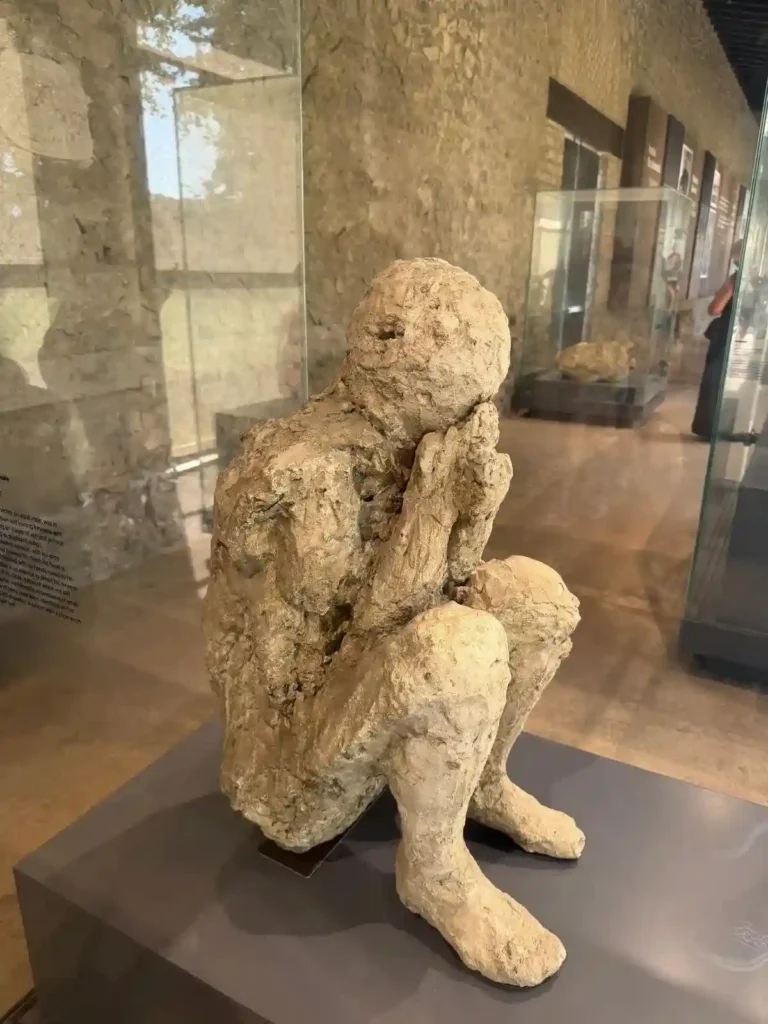
Walking through Pompeii isn’t simply an encounter with ancient ruins. It is an encounter with ourselves. The baker who never returned home that day. The family searching for one another. The children, the workers, the wealthy, the poor. Many victims stopped in their tracks – killed almost instantly by the unimaginable heat of the pyroclastic flows, while others perished from scorching ash, toxic gases, or collapsing buildings.
Standing in the ancient streets, we could still feel their suffering. Despite the two thousand years that have passed and the differences in culture and language, their hopes, fears, love for their families, and desire to live another day were no different from our own.
Pompeii also reminds us to pay attention—to our surroundings, to nature, and sometimes to the quiet warnings life gives us. The region had experienced earthquakes for years before the eruption, and smaller tremors became more frequent in the days leading up to the disaster. Yet many people had grown accustomed to them and did not recognize what was coming.
Perhaps the greatest lesson of Pompeii is this: all the luxury, wealth, technology, and comfort a civilization can create remain fragile before the immense power of the natural world. We control far less than we imagine.
Life is astonishingly beautiful because it is temporary. None of us knows what tomorrow will bring. Pompeii invites us not to live in fear, but to live with gratitude—for the people we love, the time we have, and the privilege of being alive today.